Sciatica is one of the most recognizable pains a person can feel. It starts in the lower back and shoots down through the buttock and into the leg. Anyone who has had it knows it right away. And so did people thousands of years ago.
Ancient Times

The oldest known description of sciatica comes from an Egyptian medical text called the Ebers Papyrus, written around 1550 BCE. It describes pain spreading from the lower back down the leg — exactly what we recognize today.
The Greek doctor Hippocrates wrote about it in the 400s BCE. He called it “ischiadic” pain, named after the ischium bone in the hip. That Greek word is where we get the word “sciatica.” Back then, doctors thought the pain was caused by an imbalance of bodily fluids. They were wrong about the cause, but their descriptions of the symptoms were surprisingly accurate.
The Roman doctor Galen added more detail in the 100s CE. He suggested treatments like bloodletting and hot compresses. These didn’t cure anything, but they show that doctors took the condition seriously.
Getting Closer to the Truth
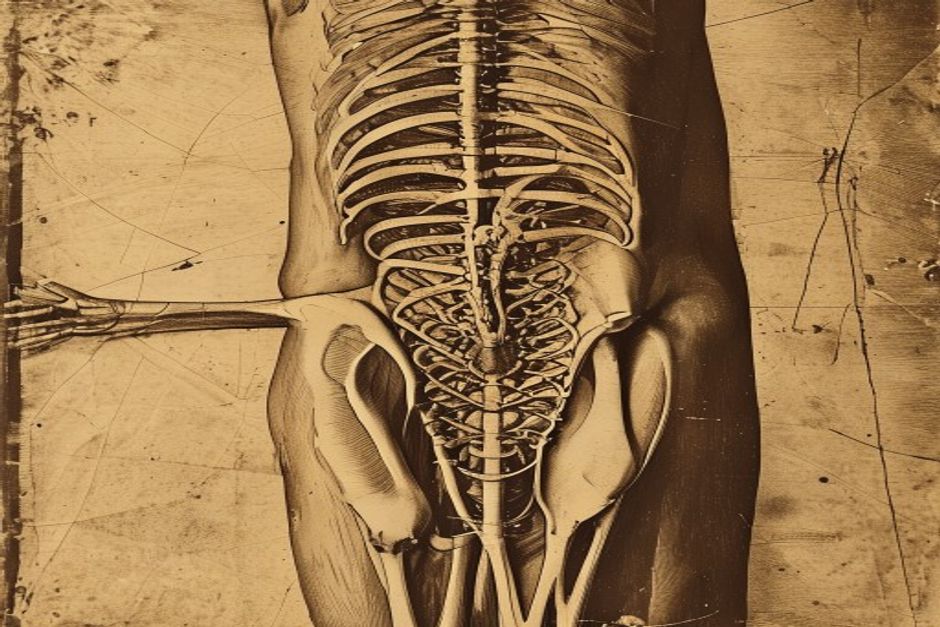
For more than a thousand years after Galen, not much changed. Medieval doctors mostly repeated the same old ideas. Then in the 1500s, an anatomist named Andreas Vesalius began carefully dissecting human bodies and drawing what he found. His detailed illustrations showed the long nerve running from the lower spine through the leg — the sciatic nerve, the longest nerve in the body.
In 1764, an Italian doctor named Domenico Cotugno made a key breakthrough. He argued that sciatica was a nerve problem, not a joint problem. This was a big deal. It meant doctors finally understood they were dealing with the nervous system, not just a sore hip. Treatments improved slowly from there, with doctors trying electrical stimulation, stretching, and warm water therapy.
The Moment Everything Changed

The real turning point came in 1934. Two American surgeons — William Mixter and Joseph Barr — published a paper showing that a slipped disc in the lower spine could press on the nerve roots and cause sciatic pain. This seems obvious now, but at the time it was a major discovery. For the first time, doctors had a clear, physical explanation for the pain.
This led directly to spinal surgery as a treatment. Within a few years, operations to remove damaged discs became common. Doctors believed surgery was the answer.
What We Know Now
Modern medicine has added important nuance. MRI scans, available since the 1980s, let doctors see exactly what’s pressing on a nerve without any surgery at all. And research has shown that most cases of sciatica get better on their own within a few weeks or months. The herniated disc often shrinks back naturally.
Today, doctors usually start with physical therapy, anti-inflammatory medicine, and targeted exercises. Surgery is saved for cases where nothing else works or where nerve damage is serious.
Sciatica has been with us for at least 3,500 years. The pain felt by an ancient Egyptian is the same pain people feel today. What has changed is our ability to understand it — and to treat it without doing more harm than good.